





Choosing Between Single-Sided and Double-Sided Diamond Strips
Diamond strips
feature an abrasive surface used to trim and shape enamel in hard-to-reach interproximal areas.
Types of Diamond Strips
Single-Sided Diamond Strips:
- Abrasive surface on one side.
- Protects adjacent teeth or restorations.
- Ideal for targeted precision.
Double-Sided Diamond Strips:
- Abrasive surfaces on both sides.
- Streamlines procedures by simultaneously reducing enamel on two teeth.
- Suitable for larger or generalized interproximal reductions.
When to Use Single-Sided Diamond Strips
Single-sided strips are the preferred choice when precision is required near sensitive or restored surfaces.
Interproximal Reduction (IPR) Near Restorations
When working adjacent to restorations such as crowns or veneers, the non-abrasive side ensures that only the natural enamel is reduced without risking damage to the restoration.
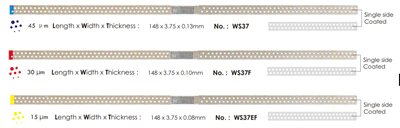
- Recommended Sizes: WS37 (0.13mm), WS37F (0.10mm) orWS37EF (0.08mm).


Kexinn Abrasives single-sided diamond strips available in medium, fine, and super fine grits, ideal for precise enamel reduction, smoothing, and polishing.
2. Refining Aesthetic Contours
For procedures like post-aligner adjustments, single-sided strips allow precise enamel contouring to achieve symmetry and smooth interproximal transitions.
3. Tight Contacts
In situations where teeth are crowded, single-sided strips offer the control necessary to navigate and shape without compromising neighboring teeth.
- Clinical Tip: Use slow, controlled motions to ensure uniform reduction.
When to Use Double-Sided Diamond Strips
Double-sided strips are efficient for cases that require enamel reduction on both sides of a contact point.
- IPR for Clear Aligners
Double-sided strips expedite the process by simultaneously addressing both interproximal surfaces, creating the space needed for aligner tracking and movement.
- Recommended Sizes: SWS37EF (0.10mm) for small reduction, SWS37F (0.12mm) for moderate reductions or SWS37 (0.16mm) for larger adjustments.
Kexinn Abrasives single-sided diamond strips available in medium, fine, and super fine grits, ideal for precise enamel reduction, smoothing, and polishing.
2. Crowding Management
Double-sided strips are effective for reducing enamel in cases of generalized crowding, particularly when multiple teeth require interproximal adjustments.
3. Smoothing Post-Bur IPR
After using IPR burs, double-sided strips can refine the surfaces, ensuring smooth contacts and minimizing plaque accumulation.
Using Diamond Strips During Crown and Bridge Procedures (Prosthodontics)
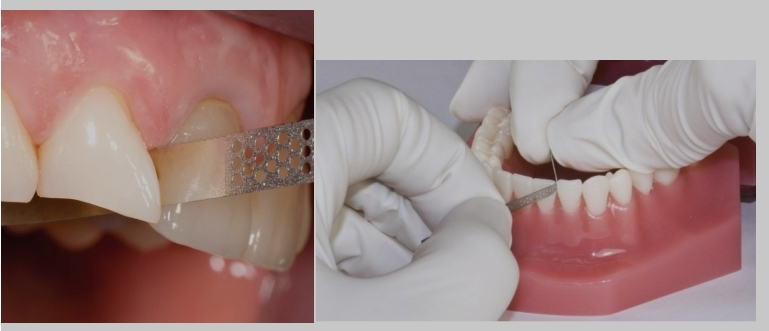
Kexinn Abrasives diamond strips enhance crown and bridge procedures by refining interproximal contacts, smoothing surfaces, and ensuring precise prosthodontic outcomes.
- Traditional Strip vs. Diamond Strip

Preparing Interproximal Contacts: Single-sided diamond strips are perfect for refining interproximal areas without affecting adjacent teeth. This ensures a snug fit for crowns and bridges, minimizing alignment issues.
Adjusting After Cementation: Double-sided diamond strips allow precise adjustments to both contacting surfaces post-cementation, enhancing comfort and reducing stress on adjacent teeth.
Polishing Before Impressions: Diamond strips smooth interproximal areas, ensuring accurate impressions for lab fabrication and elim
inating irregularities for seamless crown margins.