



Fully-Sintered Diamond Bur: The Durable, High-Performance Tool for Hard Material Grinding
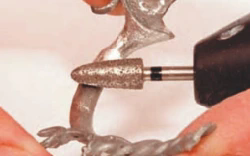
Its core advantage lies in the fully-sintered manufacturing process, a technological leap over ordinary electroplated burs. Unlike electroplated alternatives, which merely adhere diamond particles to the surface via physical bonding (leading to rapid sand loss and short lifespans), fully-sintered burs are produced using a powder metallurgy technique that combines diamond particles (typically 30–60 microns in size) with metal binders (such as cobalt or copper alloys) under extreme conditions: temperatures exceeding 1200°C and pressures of 200–500 MPa, followed by vacuum furnace sintering. This creates a metallurgical bond between the diamonds and the bur’s matrix—effectively making the bur “sand from core to surface.” The result is a durability boost of 10–100 times compared to electroplated burs: when grinding HRC50 mold steel, an electroplated bur fails within an hour due to sand layer detachment, while a fully-sintered bur operates stably for 8–12 hours, maintaining consistent cutting force and avoiding the uneven surface roughness caused by worn burs.
The HP shank (3/32 inch, ~2.35mm diameter) is a universal standard across industries—from dental labs polishing dentures to jewelry studios shaping precious metals, and mold factories refining cavity contours. This size strikes a balance between structural strength (for high-power grinding in industrial settings) and operational flexibility (for delicate work like micro-electronics lead trimming). Critically, no additional adapters are needed: a single HP-shank grinder can accommodate the entire range of fully-sintered burs, streamlining workflows and reducing equipment costs for professionals and hobbyists alike.
The bur’s five grit sizes, distinguished by color-coded rings, cover every stage of processing from rough material removal to fine polishing, with targeted applications for each:

- Black Ring (Super Coarse, 70-80 Grit): This is a workhorse for removing thick flash from cast iron automotive components. A single super coarse bur can finish 50 castings’ flash sections, cutting downtime from frequent replacements by 80% compared to electroplated burs— a game-changer for high-volume production lines where every minute of downtime costs revenue.
- Green Ring (Coarse, 100-120 Grit): Engineered for initial shaping of high-strength materials like aerospace titanium alloy blades (hardness up to HRC45), this grit maintains stable efficiency for 15+ shaping cycles without damaging the alloy matrix. For aerospace manufacturers, this consistency is non-negotiable: even minor irregularities in blade contours can compromise performance.
- Blue Ring (Medium, 140-170 Grit): The most versatile grit, it excels at batch grinding stainless steel kitchenware (e.g., knife edges and pot handles). A single medium bur can finish 100+ knife edges with uniform, burr-free results, eliminating the need for labor-intensive post-grinding touch-ups that inflate production costs. It also performs reliably on stone crafts (e.g., marble coasters), avoiding the chipping common with less durable burs.
- Red Ring (Fine, 325 Grit): Designed for detailed trimming of precious metal jewelry settings (e.g., platinum engagement ring mounts), this grit delivers a consistent surface roughness of Ra 0.2μm across 120 mounts per bur—far outperforming electroplated burs, which only handle 25 mounts before compromising finish quality. For jewelers, this means fewer ruined high-value pieces and less rework.
- Yellow Ring (Extra Fine, 600 Grit): This grit blurs the line between grinding and polishing, creating a near-mirror finish (Ra < 0.1μm) on luxury watch casings, reducing reliance on subsequent buffing with polishing compounds. In dental labs, it smooths dental crowns to ensure a comfortable fit for patients while preserving the crown’s structural integrity.
Complementing the grit options are over 10 bur shapes—including ball, cone, cylinder, and flame—each tailored to specific tasks: Ball-shaped burs conform to the curved contours of injection mold cavities, ensuring uniform material removal without flat spots; cone-shaped burs reach into narrow gaps to trim electronic component leads; cylindrical burs deliver even planar grinding for metal sheets; and flame-shaped burs create smooth, organic transitions on jewelry ring bands, elevating the piece’s aesthetic appeal.


From industrial manufacturers (reducing tooling costs in mass production) to professional artisans (securing precision for high-value works) and DIY enthusiasts (minimizing frequent bur purchases), the HP shank fully-sintered diamond bur combines long lifespan, broad adaptability, and consistent performance. For anyone working with hard materials, it is more than a tool—it is a reliable partner that balances efficiency, quality, and long-term value.